Smart hospitality is about more than apps and automated check-in. Its real promise lies in connecting the guest experience with the systems that keep a hotel running.
A guest adjusts the lights from a tablet. Behind the scenes, another system updates a room’s status, alerts maintenance to a fault or helps a team understand how much linen it needs. These moments may look unrelated, but together they show what smart hotel technology can do: connect the stay guests experience with the work that makes it possible.
That shift has taken decades. Hotels began adopting digital tools well before the arrival of smartphones or artificial intelligence. In the 1980s, computerised systems started supporting everyday operations, while electronic keys and early energy-management tools changed how hotels handled room access and building use. Much of this technology worked behind the scenes, but it laid the groundwork for more connected services.
In 2003, Hilton announced a trial of self-service check-in and check-out kiosks at its New York and Chicago properties. Guests could handle routine transactions themselves, with staff still available to help. The pilot reflected an idea that remains central to hotel technology today: automate a straightforward task, while keeping people close at hand when guests need them.
By the late 2000s, the “smart hotel” had begun to take shape as a broader concept. Technology was no longer just a set of separate tools; it could become part of how a hotel designed its service and operations. Founded in 2008, citizenM offers one example of this approach, bringing together standardised rooms, digital services and a streamlined operating model.
From individual tools to a connected stay
During the 2010s, smartphones, mobile apps and connected room controls made digital services more visible to guests. A mobile key could make arriving easier; an app or in-room tablet could give guests more control over their surroundings. At the same time, connected systems helped hotel teams share information and coordinate their work.
It helps to distinguish three related ideas. Digitalisation moves information or a task onto a digital channel, such as a guest submitting a request through an app. Automation lets a system carry out a defined action, such as updating a room’s status after housekeeping marks it clean. Artificial intelligence and analytics use data to identify patterns, make forecasts or flag unusual activity. These tools can work together, but they are not interchangeable: an app is not automatically AI, and a sensor only helps if someone can use its information.
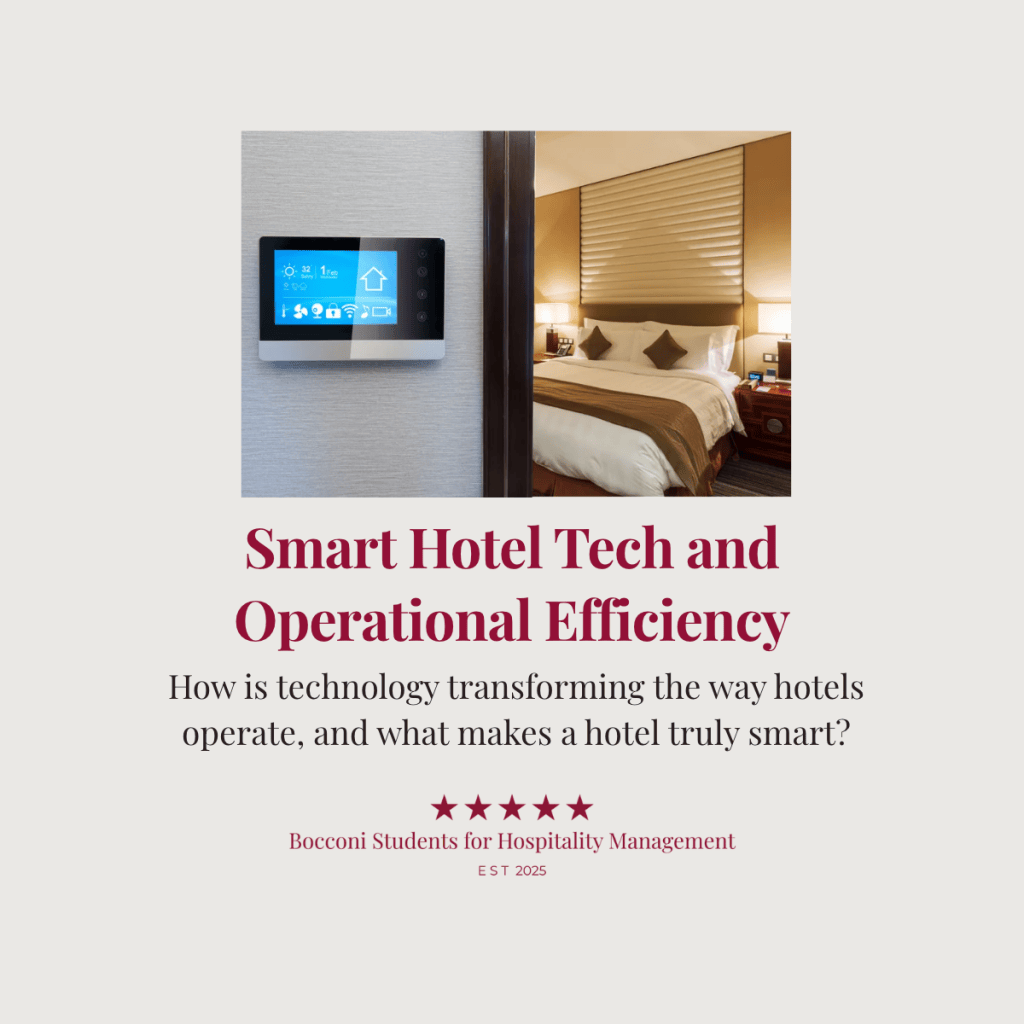
The difference becomes clear across a hotel. Guests may check in at a kiosk or use a mobile key to enter their room. They may adjust lighting, temperature, blinds or entertainment through a tablet. A messaging service or chatbot can answer routine questions and pass service requests to the relevant team.
Behind the guest-facing tools, property-management and housekeeping systems can help staff track arrivals, room assignments, cleaning and maintenance. Building-management systems can use occupancy information to adjust lighting or heating. Analytics tools can help teams forecast demand or spot recurring problems in guest feedback. In each case, the value depends on the technology fitting the hotel’s actual workflow.
citizenM: technology in the guest room and behind it
At citizenM, guests can use touch-screen kiosks to check in and out. The brand says check-in takes about 60 seconds and check-out about 30, with Ambassadors nearby to assist. In the room, an in-room tablet gives guests control over features such as temperature, lighting and shades.
The technology also works beyond the guest’s view. citizenM’s network supports guest Wi-Fi and room technology, as well as staff applications for property management, payments and security. Juniper, the network provider, says its Mist AI can detect network anomalies and help staff troubleshoot them. Here, AI supports the hotel’s technology infrastructure; it is not acting as a digital concierge for guests.
A less visible example comes from linen management. Across 17 U.S. hotels, citizenM used a digital platform to track linen stock and usage with its laundry partner. According to the published case study, opening inventory levels fell from 8–9 PAR to 3–4 PAR. The provider estimates procurement savings of $680,000–$1,020,000 across the portfolio and reports that each property saved about 456 staff hours a year by reducing manual counts and time spent locating linen. These are reported results from a specific project, not a forecast for every hotel.
Technology can also shape how a hotel uses energy. At Hilton Columbus Downtown, a package of measures—including lighting controls, occupancy-controlled thermostats and building automation—helped the property use 32% less energy annually than the relevant building standard. That result belongs to the whole package at that particular hotel; it should not be read as the expected saving from installing any single device elsewhere.
The measure of a smart hotel
The examples point to a wider change in hospitality: technology can connect the guest journey with the work happening behind the scenes. A digital key matters to the guest; accurate room information matters to the team preparing that room; reliable network infrastructure helps both sides of the experience work.
A hotel is not smart simply because it has the newest devices. The more useful question is whether its tools make a real task easier—and whether the information they generate reaches the right people at the right time. That is where technology moves beyond novelty and becomes part of the way a hotel operates.
Yet greater automation does not necessarily translate into better service or lower operating costs.
Operational efficiency and business value
Digital technologies can streamline administrative processes, improve coordination between departments, enhance staff productivity and reduce energy consumption. Real-world examples, including Hilton Columbus Downtown and citizenM, demonstrate how building automation and digital inventory management can deliver measurable operational benefits.
Nevertheless, these gains must be assessed against implementation, maintenance, staff training, cybersecurity and system integration costs. The objective should be to create genuine operational value rather than simply maximise automation.
Finding the right balance
Hotels should therefore distinguish between routine tasks suitable for automation, activities where technology can support staff, and services that require human judgement, empathy and personal attention.
The future of smart hospitality lies not in maximum automation, but in the thoughtful integration of technology to achieve operational efficiency, greater guest satisfaction and authentic human hospitality.
Research conducted by: Carlotta Pettiti, Pietro Calvaruso, Francesco Lorenzini, Melina Asimaki, Giulia Brancati De Canio, Klara Jukić, Deniz Denisa
Article edited by: Pietro Calvaruso, Melina Asimaki


Leave a Reply