
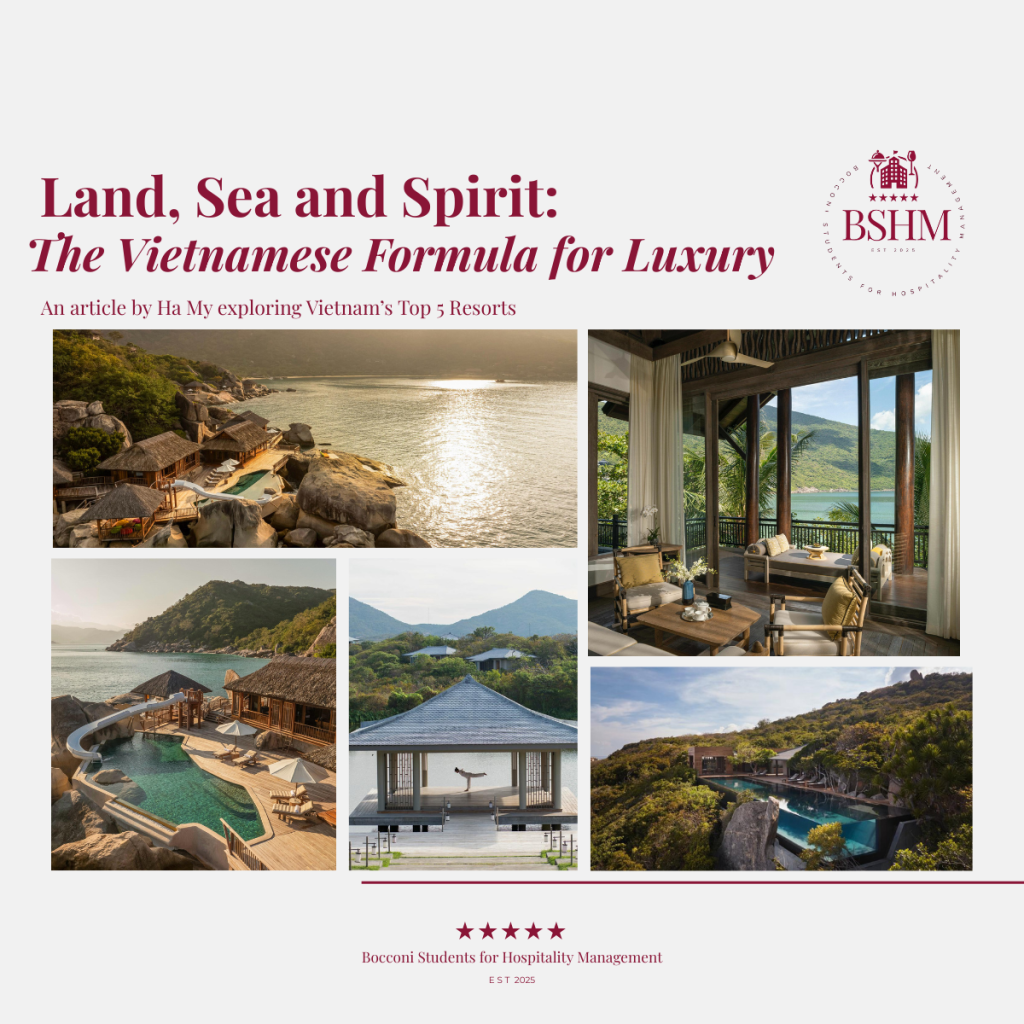
Stretching over 3,200 kilometers of coastline from the mountainous north to the tropical south, Vietnam’s geography gives it an incredible natural richness.
Vietnam has emerged as one of Asia’s most captivating resort destinations, not through its luxury alone, but through a deep respect for nature, cultural heritage, and local craftsmanship.
The following five resorts delve into how Vietnam transforms regional uniqueness into distinctive forms of luxury, reflecting both local identity and world-class sophistication.
1. Amanoi Ninh Thuan
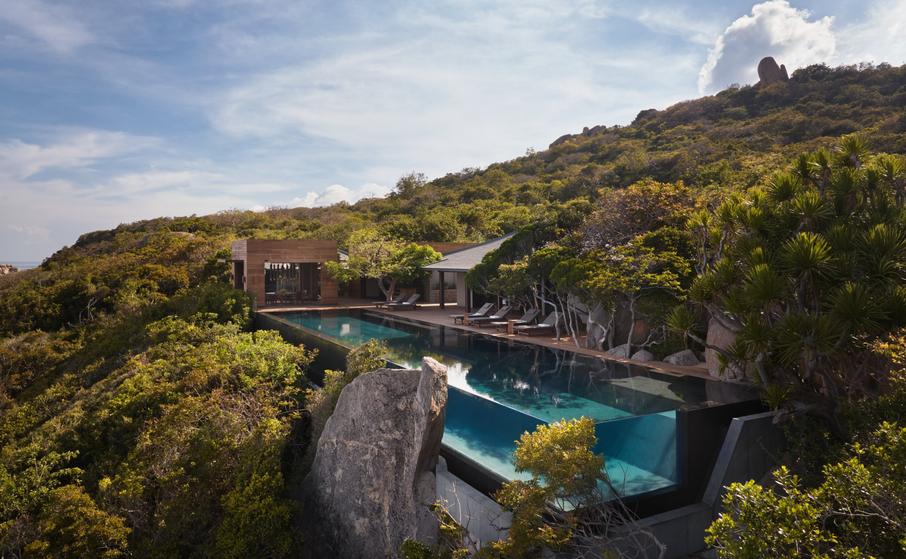
As the only resort in the list receiving Three MICHELIN Keys, Amanoi is the one that starts every conversation. Set above Vinh Hy Bay, the resorts seamlessly blend with the surrounding cliffs and forests, creating an atmosphere of tranquility. Amanoi comprises 9 pavilions, 22 villas, 12 residence villas, and 2 wellness pool villas, yet is supported by 350 staff – on average, each guest is supported by six staff.
Designed by Jean-Michel Gathy, the architecture fuses contemporary lines with Vietnamese temple motifs. All the villas are delicately arranged to ensure maximum privacy: natural barriers such as greenery are placed between to prevent sightlines from one villa to another.
Its most famous villa, Amanoi Ocean Pool Residence, prices 15000 USD for a night. Some notable activities include meditation on the mountain at sunrise, candlelit dinners in the forest, and exclusive healing therapies using local herbs, offering opulence from very simple things.
2. Six Senses Ninh Van Bay
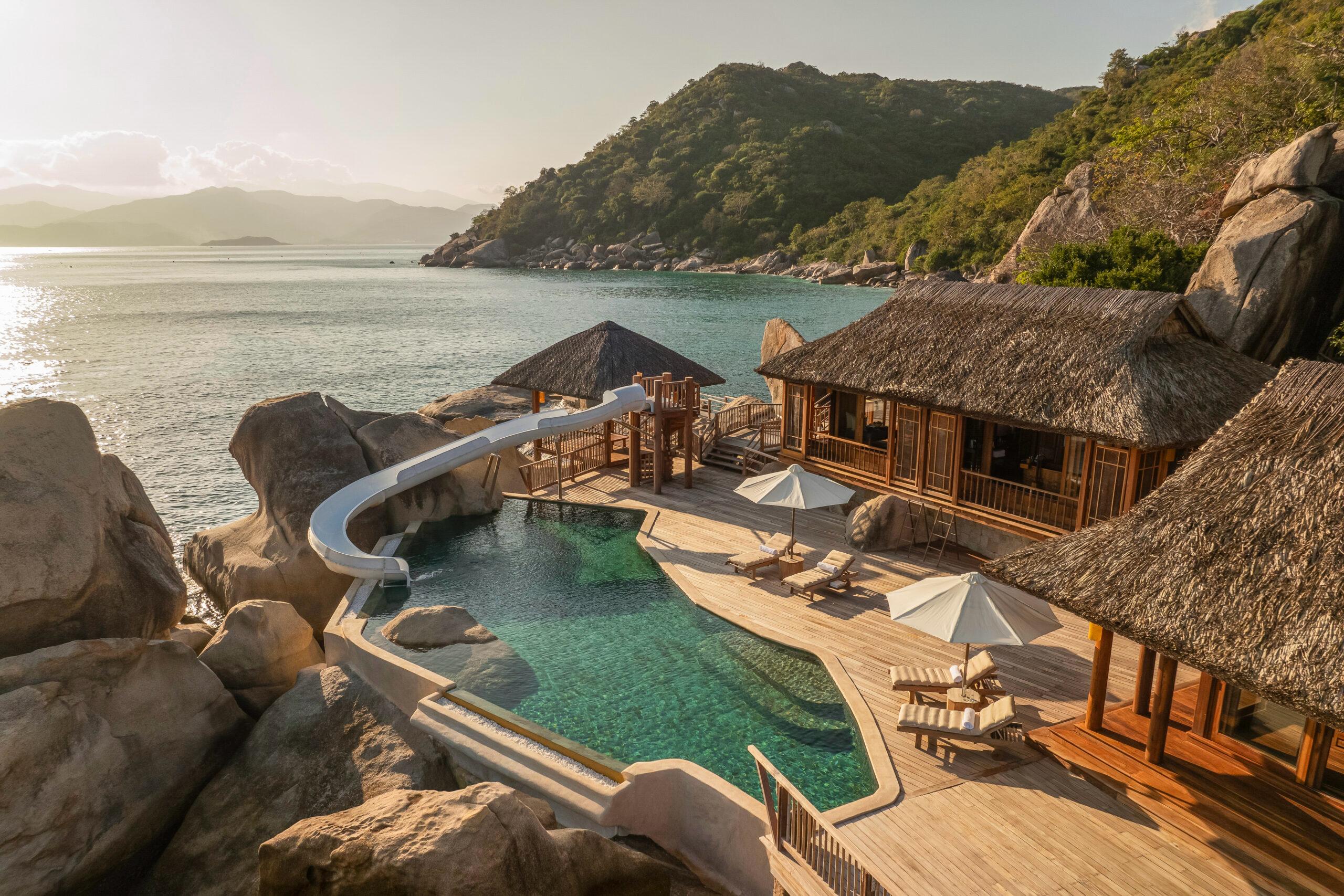
Set on a secluded bay, the resorts are accessible only by boat. Six Senses has 62 villas constructed with teak and bamboo, all with private pools and sea views. The villas reflect the simplicity of local fishing villages, proving that sustainability and luxury can coexist.
A distinctive aspect of Six Senses is its commitment to wildlife conservation. The island offers guests the opportunity to experience a life intertwined with nature, as it is home to a troop of monkeys. But stay alert! If you leave the door open, these mischievous monkeys will sneak in and get your snacks.
3. Four Seasons Hoi An

Located near three UNESCO World Heritage sites, the Four Seasons is a living museum of central Vietnamese culture. The resort comprises 100 villas, which are derived from ancient architecture, Nhà Rường, floating spa villas, and outdoor infinity pools.
Each villa seamlessly integrates with its natural surroundings: outdoor rain showers and floor-to-ceiling panoramic windows. Along with distinctive dishes of Central Vietnam like cao lầu and mì quảng made from local ingredients, the resort offers a luxury dining experience – omakase.
Guests can participate in cultural activities such as making silk lanterns, join Buddhist chanting sessions, and cruise the Cua Dai river on a basket boat, fostering a personal connection with local heritage.
4. Intercontinental Da Nang
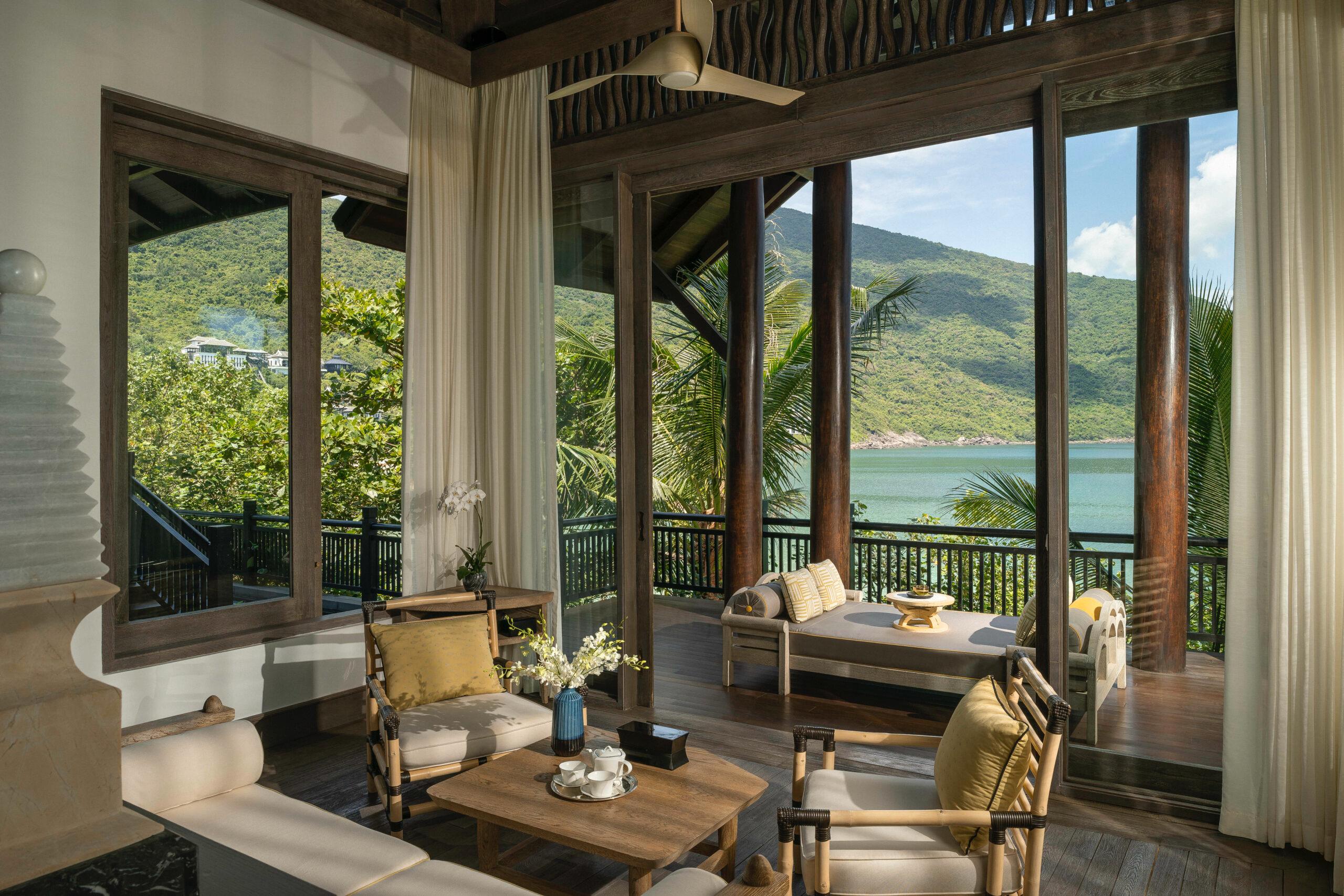
Constructed along the jungle slopes of the Son Tra Nature Reserve, the Intercontinental Da Nang blends architectural grandeur with Vietnamese touches. The accommodations span four levels, named Heaven, Sky, Earth, and Sea, offering spectacular views of the surrounding forests and sea.
The design offers indigenous Vietnamese elements such as white tiles of Vietnamese temples, wood-spindled temple windows, rugs embroidered with traditional patterns, and a Ky Lan statue – a Vietnamese mythical creature.
More than a property, the resort exemplifies cultural storytelling through gastronomy with Michelin-starred restaurant, La Maison 1888, fusing French techniques with Vietnamese ingredients.
5. Legacy Yen Tu – MGallery by Sofitel

No list of Vietnam’s top resorts would be complete without this name. Designed by world-renowned architect Bill Bensley, Legacy Yen Tu was inspired by the 12th-century Tran dynasty, offering rich historical storytelling.
Its location is known as the “cradle of Vietnamese Buddhism,” so guests can fully immerse themselves in a deep sense of serenity and tranquility. The fresh mountain air makes it feel as if time has slowed down, creating a space where guests can retreat from the chaos of life to reset their state of mind.
The architecture deeply resonates with Vietnam’s spirit and culture through handcrafted interiors and traditional materials: from Terracotta tiles, stone courtyards, to sweeping wooden beams. Every space and corner is meticulously designed.
In conclusion, luxury in Vietnam is rooted in authentic local identity, not aesthetics brought elsewhere. In a world of luxury hospitality, it is the experiences that cannot be replicated that create true value.
Article by Ha My
 Bocconi Students for Hospitality Management